Diesel engines and gas engines both need clean fluids, good filters, and proper service, but they do not age or fail in the same way. A diesel usually works harder at lower RPM, builds higher compression, and depends heavily on fuel quality, airflow, and emissions equipment.
That changes the maintenance plan.
A gas engine might complain with misfires, spark plug problems, or ignition coil trouble. A diesel is more likely to show hard starts, smoke, low power, fuel contamination issues, turbo problems, or emissions system warnings. The symptoms can overlap, but the repair path is often different.
1. Diesel Engines Do Not Use Spark Plugs
A gas engine uses spark plugs to ignite the air-fuel mixture. Diesel engines do not. They rely on heat from high compression to ignite the fuel. That means a diesel has no traditional spark plugs or ignition coils to service.
Cold starts are where this difference shows up. Many diesel engines use glow plugs or intake heaters to help the engine start when temperatures drop. If one or more glow plugs fail, the engine may crank longer, run rough for a few seconds, smoke on startup, or struggle more in cold weather.
That is a very different diagnostic path than a gas engine misfire. Instead of checking the spark, the focus shifts toward glow plug operation, compression, fuel delivery, battery strength, and cranking speed.
2. Fuel Quality Matters More
Diesel fuel systems are sensitive. Modern diesel injectors operate at extremely high pressure, and small amounts of water, dirt, or poor-quality fuel can create expensive problems. A gas engine does not like bad fuel either, but diesel fuel contamination can quickly damage pumps and injectors.
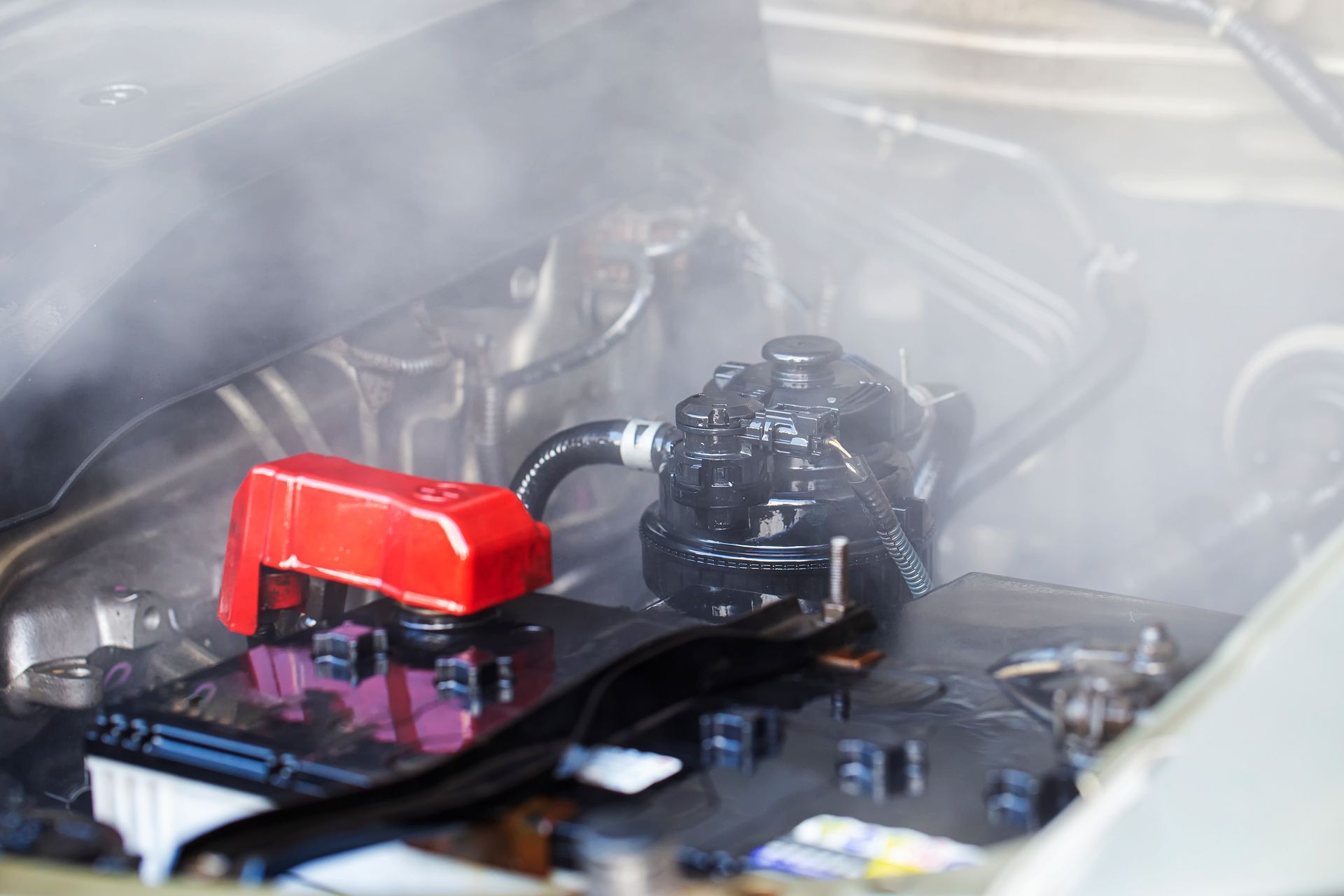
The fuel filter plays a bigger role here. It helps protect the injection system from debris and, on many vehicles, separates water from the fuel. If that filter is ignored, the engine can lose power, start hard, run rough, or trigger warning lights.
Regular maintenance on a diesel should include fuel filter service at the proper interval. If the vehicle tows, idles frequently, operates in dusty conditions, or experiences questionable fuel quality, that service becomes even more important.
3. Turbochargers Work Hard On Many Diesels
Many diesel engines use turbochargers to build power and torque. The turbo helps force more air into the engine, allowing the diesel to produce strong pulling power. It also lives in a hot, demanding place and depends on clean oil and good airflow.
Turbo trouble can show up as whistling, whining, black smoke, oil consumption, low boost, or weak acceleration. A split boost hose, clogged air filter, sticking actuator, exhaust leak, or sensor problem can feel like a bad turbo from the driver’s seat.
We look at the whole air and boost system before blaming the turbo itself. A loose clamp or cracked charge pipe can cause a lot of drama without the turbo being the failed part.
4. Diesel Emissions Systems Are More Involved
Modern diesel emissions systems are more complex than many gas systems. Depending on the vehicle, a diesel may have a diesel particulate filter, an EGR system, a DEF system, an oxidation catalyst, sensors, heaters, and control modules, all working together.
These systems do not like short trips, excessive idling, poor fuel quality, ignored warning lights, or engine problems that create too much soot. A diesel particulate filter can become restricted if regeneration does not happen correctly. A DEF fault can limit power or start a countdown on some vehicles.
This is where diesel repair can get expensive when warnings are ignored. The engine, fuel system, turbo, and emissions system all affect each other. If the truck is smoking, losing power, or showing emissions warnings, the cause needs to be found before parts get replaced at random.
5. Oil And Cooling Needs Are Different
Diesel oil has to handle soot, heat, pressure, and heavy loads. The correct oil specification matters because diesel engines place different lubrication demands than gas engines. Using the wrong oil can affect wear protection, emissions equipment, and long-term engine health.
Cooling systems also work hard. Diesel engines often carry heavy loads, tow, idle for long periods, or climb grades where heat builds quickly. Low coolant, weak hoses, a restricted radiator, or a failing water pump can create trouble fast.
A diesel may keep running while a small issue builds in the background. That is why an inspection during service should include oil condition, coolant level, belts, hoses, air intake parts, leaks, and warning messages. Small clues matter more when the engine is built to work hard.
Why Diesel Service Needs The Right Approach
Diesel maintenance is not just gas-engine maintenance with a different fuel. The systems are built differently, and the symptoms need a diesel-minded approach. Hard starting, smoke color, boost pressure, fuel pressure, injector balance, soot load, and temperature behavior can all tell part of the story.
That does not mean diesel service has to be complicated for the driver. It means the basics need to be done on time, with the correct fluids and filters, by a shop that understands what those symptoms usually point toward.
A diesel can last a long time when it is serviced correctly. It can also get expensive fast when fuel, oil, cooling, or emissions problems are left to sort themselves out.
Get Diesel Engine Maintenance In Squamish, BC, With Diamond Head Motors Ltd
If your diesel is hard to start, smoking, losing power, showing warning lights, or due for service, Diamond Head Motors Ltd in Squamish, BC, can check the fuel, oil, turbo, cooling, and emissions systems.
Schedule a visit and keep your diesel running the way it was built to.