There is a long list of maintenance tasks that come with owning a modern vehicle. Some of them get immediate attention. If your oil change light pops up on the dashboard, you usually schedule an appointment within a week or two. If your brakes start making a metallic squealing noise, you call a mechanic because your survival instincts kick in.
But then there is the humble tire rotation. It rarely has a dedicated warning light on the dashboard, it does not make a sound when it is overdue, and your car will continue to drive perfectly straight down the road even if you have skipped the service for two years.
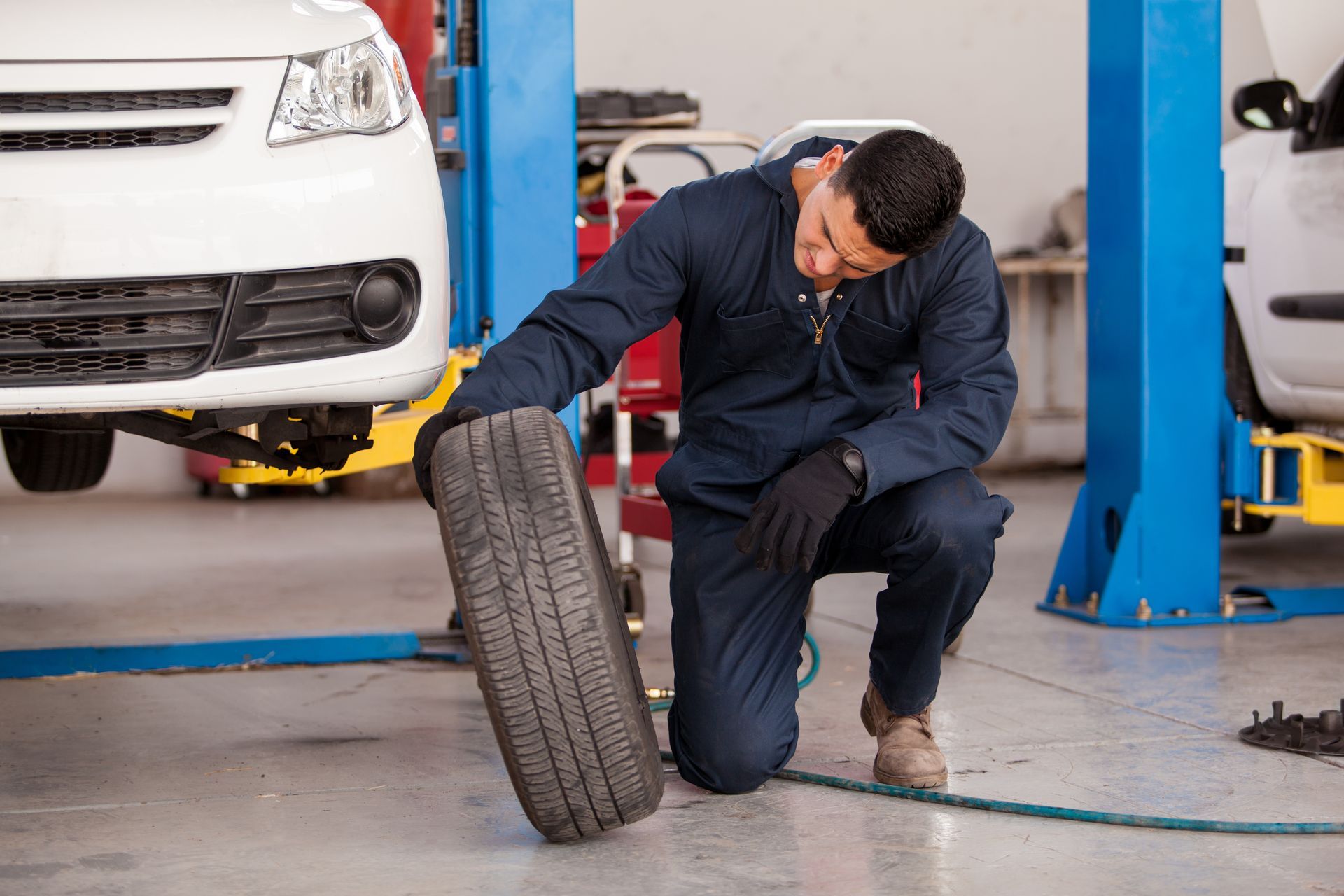
At our shop, we notice that tire rotations are the single most neglected preventative service in the entire automotive world. When we ask customers when their tires were last swapped from front to back, the most common response is a blank stare or a shrug. Today, we want to talk about why this simple service gets pushed to the back burner so often and why skipping it is quietly costing you a lot of money.
Why Drivers Skip the Rotation
We talk to hundreds of drivers a month, so we have a pretty good understanding of why people let this maintenance item slide. It usually boils down to a few understandable mental hurdles.
- The Invisible Problem: When your oil is dirty, it breaks down your engine. When your brake pads wear thin, you can feel it in the pedal. With tire wear, the changes happen in fractions of a millimeter over thousands of miles. Because you cannot see the damage happening from the driver's seat, it simply stays out of mind.
- The Sunk Cost Fallacy: Tires are incredibly expensive. When people spend a significant amount of money on a brand-new set of rubber, they subconsciously assume those tires are perfect and should not need to be touched for a long time.
- Time and Convenience: Let's face it, life is busy. Pulling out of your daily routine to sit in a waiting room just to have your wheels moved around can feel like a low-priority chore when your vehicle seems to be working fine.
The Reality of Your Front Wheels
To understand why skipping a rotation is such a gamble, you have to look at the immense physics concentrated at the front of your vehicle. In almost every standard car, SUV, or crossover on the road today, the front tires bear a massive percentage of the workload.
First, they carry the weight of the engine and transmission, which sits directly over them. Second, every time you press the brake pedal, the weight of the vehicle shifts forward, forcing the front tires to handle about seventy percent of the stopping friction. Third, they are responsible for steering. Every turn you make puts intense lateral pressure on the outer shoulders of the front rubber.
Meanwhile, your rear tires are mostly just rolling along for the ride. If you never rotate them, your front tires will wear out twice as fast as the rears. By the time you notice the issue, your front tread will be completely bald while your rear tires look brand new, forcing you to buy tires in mismatched pairs instead of maximizing the lifespan of the full set.
What You Lose When You Wait
Skipping this service does more than just shorten the life of your rubber. It impacts your entire driving experience in a few specific ways.
- Fuel Economy: As tires wear unevenly, they create more rolling resistance against the pavement. Your engine has to work slightly harder to push the car forward, which quietly lowers your miles per gallon.
- Safety in the Rain: Deep tread patterns are designed to channel water away from the tire to prevent hydroplaning. If your front tires are bald because they were never rotated to the rear, your steering response in a sudden downpour drops significantly.
- All-Wheel Drive Strain: For vehicles with all-wheel drive, the computer systems expect all four tires to be the exact same diameter. If the front tires wear down much faster than the rears, the difference in tire height can put constant strain on your center differential, leading to costly drivetrain repairs.
Getting on the Right Schedule
The easiest way to stop forgetting your rotations is to pair them with an appointment you already keep. We recommend rotating your tires every 5,000 to 7,500 miles, which perfectly aligns with the standard interval for a synthetic oil change. By getting into the habit of asking for a rotation every single time your oil is swapped, you ensure your tires wear down at a perfectly uniform rate.
Let Us Help You Protect Your Investment
We know that managing car maintenance can feel overwhelming, but our goal is to make it as simple and transparent as possible. When you bring your vehicle to us, we do not just spin the tires around blindly. We inspect the tread depth, check for signs of alignment issues, and ensure your tire pressures are adjusted perfectly.
Can’t remember the last time your tires were rotated? Stop by
Diamond Head Motors Ltd in Squamish, BC or book an appointment online today.