Few tire problems create as much uncertainty as a puncture. A nail in the tread may look minor enough to fix quickly, while damage that appears similar from the outside can hide problems inside the tire that make continued use unsafe.
The condition of the entire tire has to be considered before deciding what to do next. Puncture location, size, tread depth, previous repairs, sidewall condition, and whether the tire was driven while low on air all influence the repair decision.
Tread-Area Punctures Are Often Repairable
A puncture in the central tread area is the type most likely to be repaired. Small holes caused by nails or screws can often be fixed if they fall within repairable limits and the surrounding tire remains in good condition.
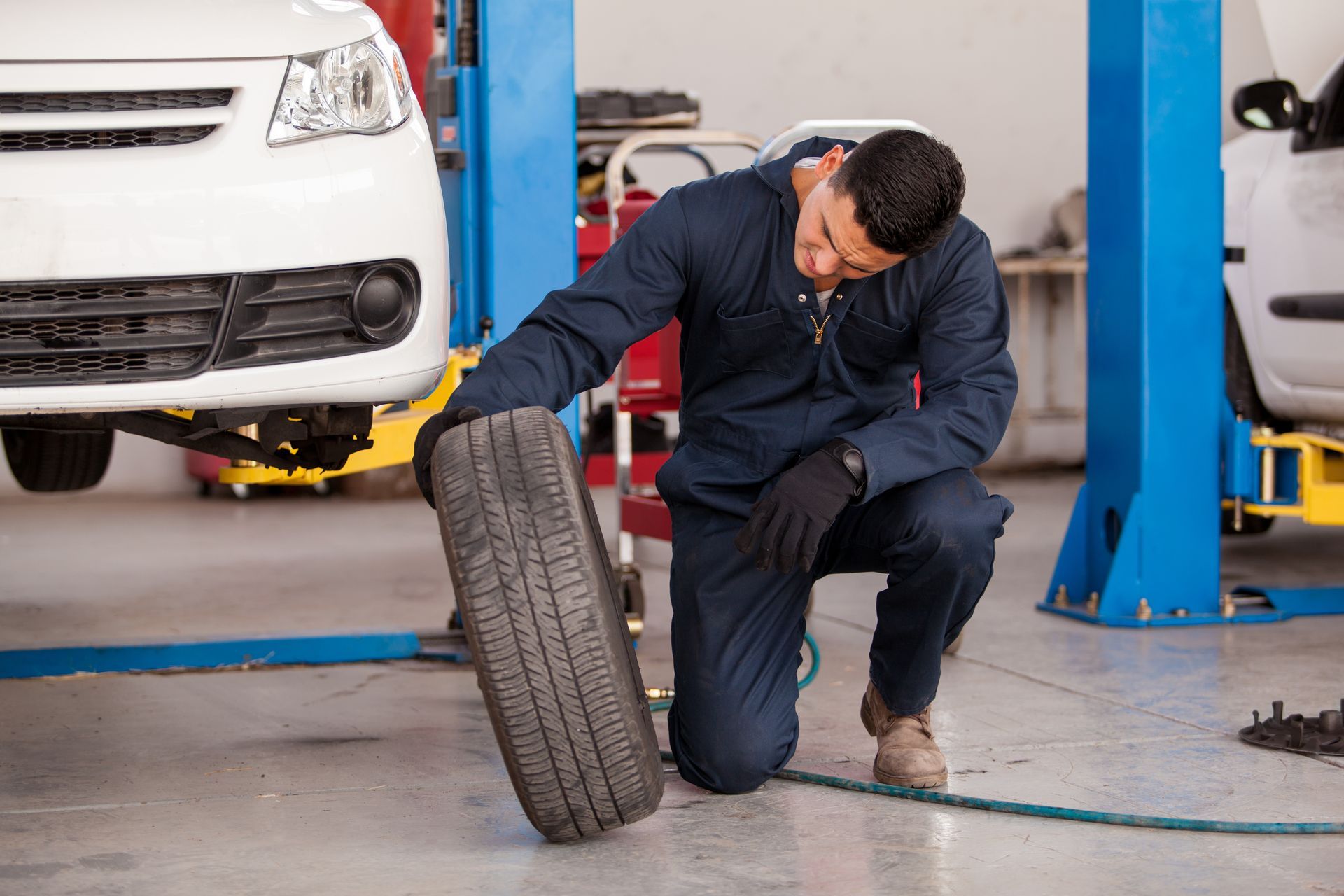
The tire should be removed from the wheel so the inside can be checked for hidden damage. A proper repair seals the injury through the tread and also seals the inner liner, helping prevent both air loss and moisture from reaching the tire's internal structure.
Sidewall Damage Usually Means Replacement
The sidewall flexes constantly as the tire rolls, corners, and absorbs bumps. Because of that movement, repairs in the sidewall are generally not considered safe.
A cut, puncture, bulge, or split in this area usually means the tire needs replacement. The same applies to damage in the shoulder, where the tread curves into the sidewall. These areas experience too much movement for a conventional puncture repair to remain dependable.
A Tire Driven While Flat May Be Damaged Inside
One of the biggest reasons a repair may not be possible is driving on the tire after it loses most of its air. With very low pressure, the sidewall can become pinched and overheated as the vehicle's weight crushes it between the wheel and the road.
The tire may look acceptable after being reinflated, but the inside can show wrinkling, rubber debris, damaged cords, or other evidence that the sidewall has been weakened. Once that kind of structural damage has occurred, replacement is the safer option.
Large Punctures May Be Beyond Repair
Puncture size also influences whether a tire can be saved. A small nail hole is very different from damage caused by a large bolt, piece of metal, or road debris.
If the opening is too large, the damaged area may not be able to support a safe permanent repair. Long cuts and irregular tears are particularly concerning because they can damage multiple internal cords rather than creating one clean puncture.
Some Common Reasons a Tire Should Be Replaced
A tire may need replacement even when the original complaint was only a slow air leak. Once the tire is inspected, additional problems can change the recommendation.
Replacement may be appropriate when there is:
- Sidewall or shoulder damage
- A bulge or visible cord damage
- A large or irregular puncture
- Severe damage from driving while flat
- Multiple punctures too close together
- Tread worn to an unsafe depth
- Extensive cracking or deterioration
- Damage to a previous repair area
The entire tire should be considered rather than focusing only on the newest puncture.
Previous Repairs Can Affect the Decision
A tire can sometimes be repaired more than once, but the location of the earlier repairs is important. New damage too close to an existing repair may leave an area of tread with too much structural disruption.
Technicians need to see where previous repairs were made and how well they were completed. If there are several punctures clustered together, replacing the tire may make more sense than continuing to add repairs to the same section.
An External Plug Is Not the Same as a Complete Repair
A quick plug inserted from the outside may stop an air leak temporarily, but it does not allow the inside of the tire to be inspected. It may also leave the inner liner inadequately sealed.
A more complete repair generally requires removing the tire and using an approved repair method that addresses both the puncture channel and the inner liner. This also gives the technician a chance to find damage caused by low-pressure driving that would otherwise remain hidden.
Tread Depth and Tire Age Still Count
Repairing a puncture on a tire near the end of its useful life may not be the best use of money. If the tread is already badly worn, you could pay for a repair and still need to replace the tire soon afterward.
Age and condition deserve attention too. Cracking, hardened rubber, weather damage, or other deterioration can make an otherwise small puncture less worth repairing. The tire's overall condition should support continued service before any repair is approved.
Do You Have to Replace More Than One Tire?
Sometimes one damaged tire can be replaced by itself. The decision depends on the tread depth of the remaining tires, drivetrain type, and how closely the replacement matches the others.
All-wheel-drive vehicles can be especially sensitive to differences in tire circumference. If one brand new tire has substantially more tread than the other three, the difference may fall outside the vehicle manufacturer's limits. In that case, more than one tire may need replacement, or another suitable solution may need to be considered.
Do Not Ignore a Tire That Keeps Losing Pressure
A slow leak may come from a puncture, but it can also be caused by a leaking valve stem, wheel corrosion, damaged bead, cracked wheel, or tire pressure monitoring system seal.
Repeatedly adding air does not address the source. Driving with low tire pressure can increase heat, accelerate tread wear, and eventually damage a tire that might originally have been repairable. An inspection is worthwhile when one tire consistently loses more air than the others.
Repairing the Tire Early Gives You More Options
A small nail puncture that is found quickly may be a straightforward repair. The same puncture can become a replacement situation if the tire is driven for miles with very little air.
If the tire pressure warning comes on, check the tire rather than assuming it is only a temperature change. Catching air loss early can protect the sidewall from damage and give you a better chance of keeping the tire in service.
Get Tire Repair and Replacement in Squamish, BC, With Diamond Head Motors Ltd
Diamond Head Motors Ltd in Squamish, BC, can inspect punctures, sidewalls, tread condition, valve stems, wheels, and previous repairs to determine whether a tire can be safely repaired or should be replaced.
If one of your tires is losing air, has visible damage, or has been driven while flat,
contact us to schedule a tire inspection.