An exhaust leak can be easy to ignore when the weather is warm and the windows are open. You hear a ticking or puffing sound, maybe smell exhaust once in a while, and the car still seems to drive normally.
Once cooler weather arrives and the windows stay closed, that same leak becomes more concerning. Exhaust gases can collect around the vehicle and enter the cabin through body openings, the ventilation system, or damaged seals. The farther forward the leak is, the more seriously we take it.
Exhaust Gas Can Enter the Passenger Compartment
The exhaust system is designed to carry combustion gases from the engine to the rear of the vehicle. If a pipe, manifold, flange, flex joint, or gasket leaks before the tailpipe, those gases are released underneath or near the front of the car.
With the windows closed, the cabin depends much more on the HVAC system and body seals for fresh air. If exhaust is escaping near the firewall or underneath the floor, pressure changes around the moving vehicle can pull fumes toward openings in the body. At our shop, we pay close attention to leaks ahead of the catalytic converter and under the passenger area because of where those gases are being released.
Carbon Monoxide Is the Biggest Safety Concern
Carbon monoxide is one of the gases produced by combustion. You cannot see it, and you cannot rely on your sense of smell to warn you that it is present.
A person exposed to carbon monoxide can develop headache, dizziness, nausea, weakness, confusion, or unusual tiredness. Those symptoms can be dangerous behind the wheel because they affect judgment and reaction time. If anyone in the vehicle starts feeling ill and you suspect exhaust fumes are entering the cabin, get out of the vehicle and have the problem checked before driving again.
Leaks Near the Engine Can Be Harder to Ignore
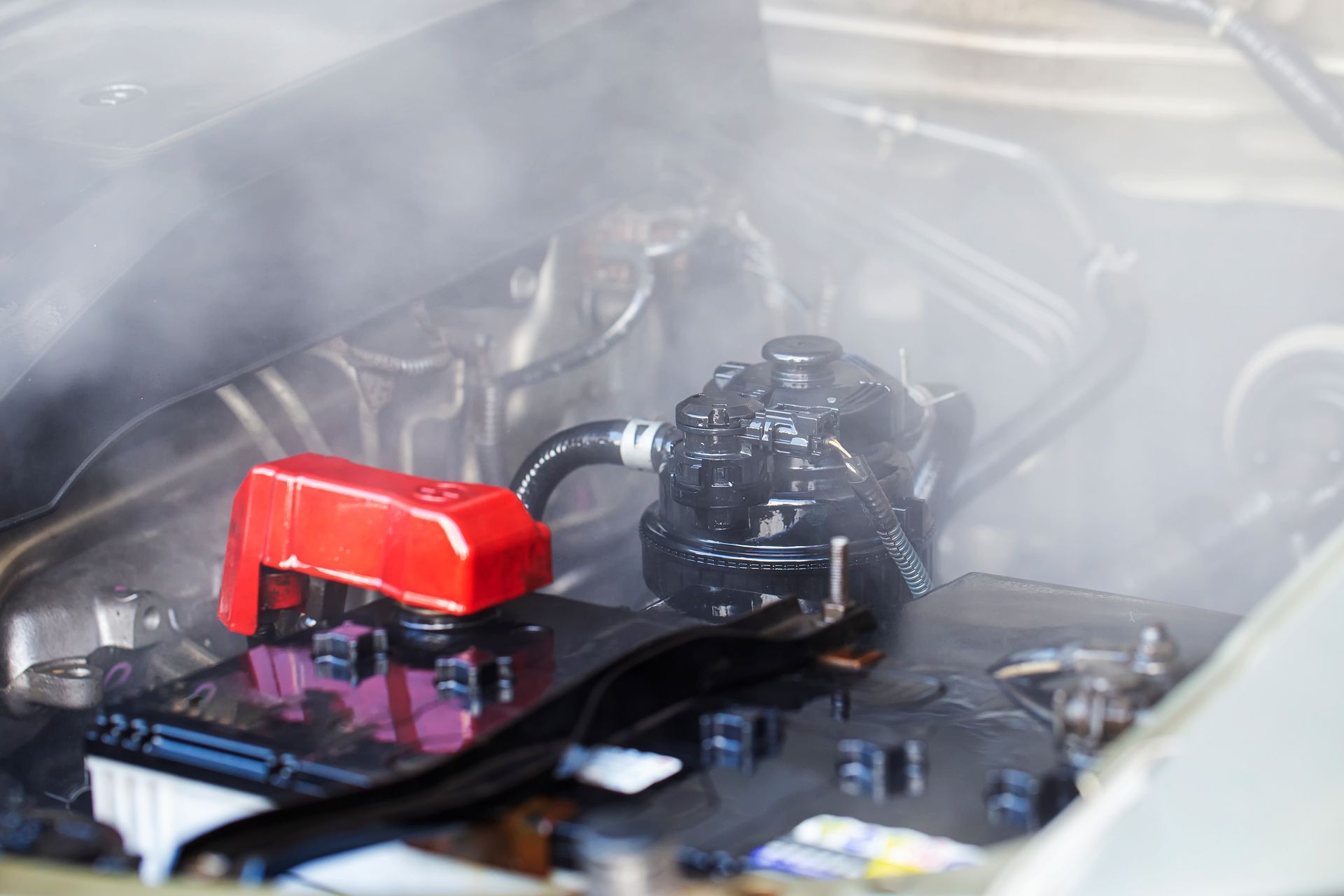
An exhaust manifold leak or failed gasket often creates a ticking sound that is strongest during startup. As the metal heats and expands, the noise can change or become quieter.
That does not mean the leak has fixed itself. Exhaust escaping near the engine compartment can move toward the fresh-air intake at the base of the windshield. When the heater or defroster is running, the HVAC system can pull outside air into the cabin, which is one reason an exhaust smell can become more noticeable during colder weather.
Rust and Cracked Flex Pipes Are Common Leak Sources
Exhaust systems live through heat, moisture, road spray, and vibration every day. Over time, pipes can rust through, welds can crack, and flex sections can split.
In coastal, wet environments, corrosion deserves even more attention. A small pinhole can become a larger opening as the surrounding metal thins. During an inspection, we look at the pipes, mufflers, flanges, flex joints, clamps, and hangers rather than assuming the loudest area is the only damaged section.
The Heater Can Make the Smell More Noticeable
When temperatures fall, drivers spend more time with the windows closed and the blower running. That changes airflow through the vehicle.
If exhaust is collecting around the front or underside of the car, the ventilation system can make the odor easier to notice. You might smell fumes most strongly while idling, sitting in traffic, or using the heater at low road speed. If the smell fades once you are moving faster, that still does not make the leak harmless. It only tells us airflow around the vehicle is changing how the fumes travel.
An Exhaust Leak Can Also Affect Engine Operation
Leaks ahead of oxygen sensors can create problems beyond noise and fumes. Outside air entering the exhaust stream can affect the sensor readings the engine computer uses to adjust fuel mixture.
That can contribute to a check engine light, rough running, poor fuel economy, or fuel-control problems. A leak farther back in the system is less likely to affect engine management, but it can still create noise and allow exhaust gases to escape where they should not. The leak's location helps determine both the safety concern and the effect on engine operation.
Do Not Treat an Exhaust Smell as Normal
A slight exhaust odor outside the vehicle during a cold start is different from repeatedly smelling fumes inside the cabin. If the smell is coming through the vents, getting stronger at stoplights, or appearing whenever the windows are closed, the exhaust system needs attention.
Regular maintenance gives us a chance to catch corroded pipes, loose flanges, damaged hangers, and small leaks before they grow. If the exhaust suddenly becomes louder or you hear a sharp ticking from the engine area, an inspection is worth scheduling before colder weather keeps the cabin sealed up for longer periods.
Get Exhaust Leak Repair In Squamish, BC, With Diamond Head Motors Ltd
If your vehicle has become louder, you smell exhaust inside the cabin, or the fumes are more noticeable with the heater running and the windows closed, Diamond Head Motors Ltd in Squamish, BC, can inspect the manifolds, pipes, flex joints, flanges, mufflers, and related exhaust components.